
How Recycled Metals Reduce Manufacturing Costs
In today’s competitive manufacturing environment, controlling production costs is essential. At the same time, manufacturers must maintain product quality, manage energy consumption, and respond to growing sustainability expectations. Therefore, material sourcing has become an important part of cost management.
One practical approach is using Recycled Metals as part of the manufacturing supply chain. When suitable scrap is processed and converted into usable feedstock, manufacturers can reduce the energy and resource requirements associated with primary metal production.
For businesses looking for dependable material sources, working with a premium recycled metals supplier can also support consistent procurement while helping manufacturers make greater use of secondary materials.
Why Recycled Metals Matter in Manufacturing
Manufacturers use metals such as aluminum, copper, steel, and other alloys across construction, automotive, electrical, machinery, and consumer products. However, producing metals from virgin ores can require significant amounts of energy.
The U.S. Department of Energy notes that steelmaking is energy-intensive because it involves high temperatures for smelting, melting, and refining. It also reports that remelting steel scrap in Electric Arc Furnaces requires less than half the energy of producing steel through blast furnace and basic oxygen furnace routes.
Consequently, using Recycled Metals can help manufacturers reduce energy-related production requirements where the recycled feedstock is suitable for the intended application.
1. Lower Energy Requirements
Energy is a major manufacturing expense. Therefore, reducing the energy required to produce raw materials can have a direct effect on production economics.
Aluminum provides a clear example. The U.S. Department of Energy has reported substantial energy savings when secondary aluminum replaces primary aluminum, with one assessment estimating facility energy savings of up to 47.9 GJ for every metric ton of primary aluminum replaced by secondary aluminum under specific substitution assumptions.
Similarly, the Copper Development Association states that recycling copper requires about 85% less energy than primary copper production.
Thus, Recycled Metals can help manufacturers reduce the energy burden associated with material production.
2. Reduced Dependence on Primary Raw Materials
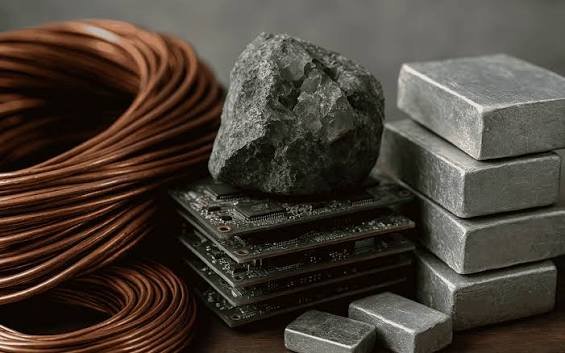
Primary metal production depends on extracting and processing ores. Recycling instead creates a secondary source of material from existing products and manufacturing scrap.
This approach can improve material efficiency because valuable metals remain within the production cycle rather than being discarded. Moreover, the U.S. Department of Energy’s REMADE program specifically focuses on increasing material reuse, recycling, remanufacturing, sorting, separation, and cost-effective reprocessing.
As a result, Recycled Metals can become an important component of a circular manufacturing strategy.
3. Potential Savings in Processing Costs
Recycling does not eliminate every processing expense. Scrap must still be collected, sorted, processed, tested, and prepared for manufacturing. However, the overall material pathway can require substantially less energy than producing some metals from virgin resources.
For example, the DOE reports that recycled aluminum can require dramatically less energy than primary aluminum production. In addition, a DOE-supported aluminum recycling facility demonstrated energy and cost reductions through improved processing and shorter transportation distances.
Therefore, manufacturers can potentially improve cost efficiency when they combine suitable scrap feedstock with efficient recycling and processing systems.

4. Supporting Efficient Copper Supply
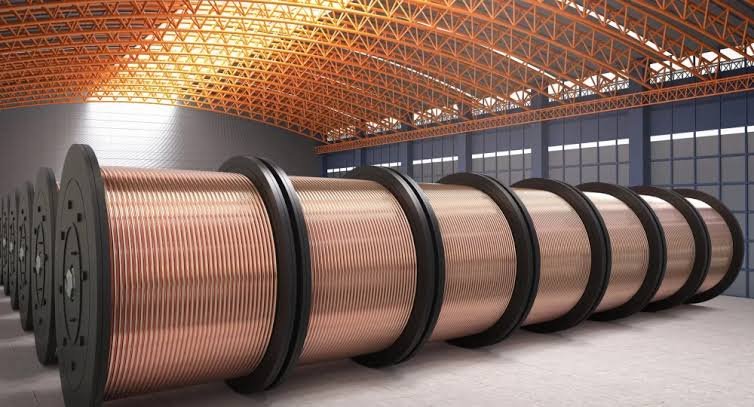
Copper is particularly important for electrical products, power infrastructure, machinery, and wire manufacturing. Because copper can be recycled repeatedly without losing its fundamental properties, recovered copper can return to manufacturing applications.
For companies purchasing copper-related materials, choosing an experienced Best copper wire rod supplier in india can help support dependable material procurement and product consistency.
Furthermore, copper recycling can reduce the energy requirements associated with producing copper from primary resources. This creates an opportunity for manufacturers to consider recycled feedstock as part of their broader material strategy.
5. Better Material Utilization
Manufacturing generates scrap during cutting, machining, forming, fabrication, and other processes. Instead of treating all metal scrap as waste, businesses can recover suitable material and return it to productive use.
This approach supports better material utilization. Additionally, improved sorting and characterization can help manufacturers understand the composition and quality of scrap before processing.
The DOE has highlighted technologies that identify scrap composition, contamination, and other characteristics to improve confidence in recycled aluminum feedstocks.
Consequently, Recycled Metals can contribute to more efficient resource management when supported by appropriate quality-control systems.

6. Lower Environmental and Resource Impacts
Cost reduction is not the only benefit. Recycling can also reduce the need for new resource extraction and lower the energy associated with producing metals from virgin materials.
The DOE states that using recycled materials to manufacture new materials and products can reduce energy requirements and emissions, while also reducing waste.
Therefore, manufacturers can connect resource efficiency with sustainability objectives. This can be particularly useful for businesses developing long-term circular manufacturing strategies.
7. Quality Control Remains Essential
Cost savings should never come at the expense of product specifications. The suitability of recycled feedstock depends on factors such as composition, contamination, alloy requirements, and the final application.
For example, the DOE identifies contamination and unwanted impurities as challenges in steel and aluminum scrap streams. Effective sorting, testing, separation, and blending are therefore important for maintaining material quality.
For this reason, Recycled Metals should be sourced according to clearly defined technical specifications rather than price alone.
Conclusion
Manufacturers increasingly need to balance cost, efficiency, material availability, and sustainability. Using Recycled Metals can support these objectives by reducing energy requirements, improving material utilization, and creating productive uses for recovered resources.
However, the financial benefit depends on the metal, feedstock quality, processing method, transportation requirements, and manufacturing application. Therefore, companies should evaluate recycled materials based on both technical suitability and total production economics.
With effective sourcing, quality control, and recycling infrastructure, Recycled Metals can play an important role in building more efficient and resource-conscious manufacturing operations.