
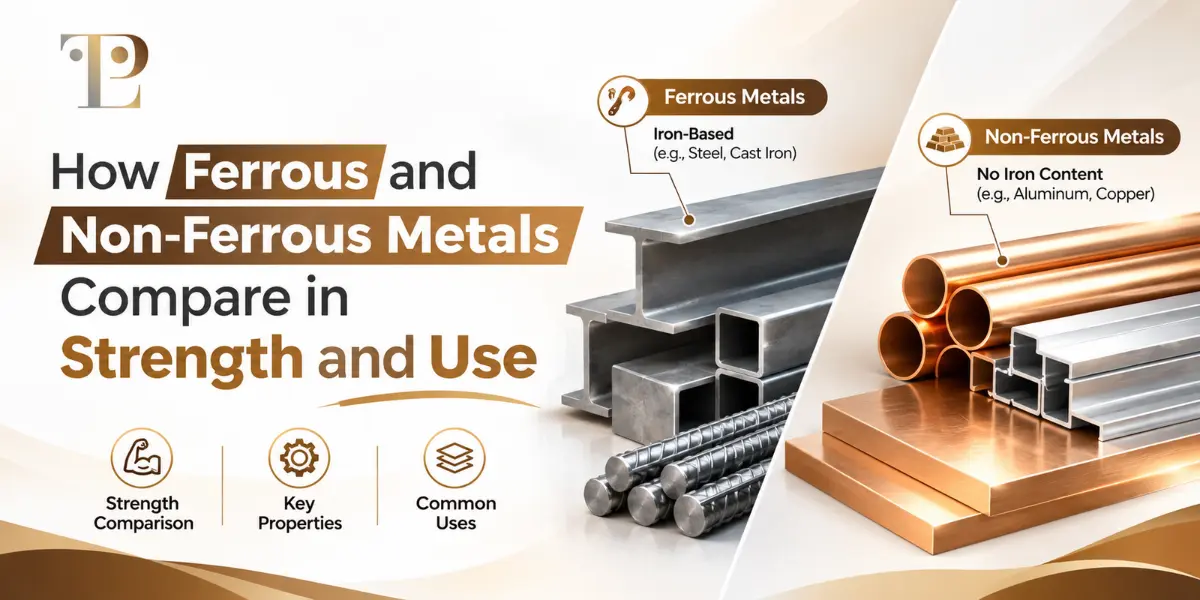
How Ferrous and Non-Ferrous Metals
Compare in Strength and Use
Metal selection plays an important role in manufacturing, construction, engineering, and infrastructure. Every industry requires materials that offer suitable strength, durability, and performance. However, different metals have different physical and mechanical properties. Therefore, understanding their differences helps businesses make better material decisions.
Two major categories used across industries are ferrous and non-ferrous metals. While ferrous metals are widely recognized for their structural strength, non-ferrous metals offer advantages such as corrosion resistance, lower weight, and electrical conductivity. As a result, choosing the right material depends on its intended application.
Moreover, working with a reliable non-ferrous metal or scrap supplier in India can help businesses access suitable materials for different industrial requirements.
What Are Ferrous Metals?
Ferrous metals are materials that contain iron as their primary component. They are widely used in heavy industries because many ferrous alloys offer excellent tensile strength, hardness, and structural stability.
Common examples include:
- Carbon steel
- Stainless steel
- Cast iron
- Alloy steel
- Wrought iron
These materials support construction projects, transportation systems, industrial machinery, and manufacturing equipment.
Key Characteristics of Ferrous Metals
Ferrous metals offer several important properties:
- High structural strength: Many steel grades withstand considerable mechanical loads.
- Durability: They support demanding industrial applications.
- Magnetic properties: Iron-based materials are generally magnetic, although some stainless steel grades are exceptions.
- Hardness: Certain ferrous alloys resist surface wear and deformation.
- Manufacturing versatility: They support processes such as casting, welding, machining, and fabrication.
However, ordinary carbon steel can rust when exposed to moisture and oxygen. Consequently, manufacturers often use protective coatings, painting, or corrosion-resistant alloying elements to improve its service life.
What Are Non-Ferrous Metals?
Non-ferrous metals contain no iron as their main constituent. Unlike conventional iron-based materials, they offer different combinations of weight, conductivity, corrosion resistance, and mechanical performance.
Some common examples include:
- Aluminum
- Copper
- Zinc
- Lead
- Tin
- Nickel
These materials serve important roles in electrical systems, automotive manufacturing, engineering, and industrial production.
Key Characteristics of Non-Ferrous Metals
Non-ferrous materials provide several useful advantages:
- Corrosion resistance: Aluminum develops a protective oxide layer, while copper offers good resistance to corrosion.
- Lightweight structure: Aluminum is particularly useful when reducing overall product weight matters.
- Electrical conductivity: Copper and aluminum are widely used in electrical applications.
- Non-magnetic properties: Many commonly used non-ferrous metals are non-magnetic.
- Formability: Several materials can be shaped into sheets, wires, tubes, and other components.
Furthermore, alloying can improve their hardness, strength, and overall performance.
Strength Comparison: Ferrous vs Non-Ferrous Metals
Strength is one of the most important factors when selecting industrial materials. However, strength does not depend only on whether a metal contains iron. Its chemical composition, manufacturing process, and heat treatment also influence performance.
1. Tensile and Structural Strength
Ferrous metals, particularly structural and alloy steels, are popular for applications requiring high tensile strength and load-bearing capacity.
For example, steel supports bridges, building frameworks, industrial machinery, and heavy equipment. Similarly, cast iron provides useful compressive strength in suitable applications.
On the other hand, non-ferrous metals also offer considerable mechanical strength. Aluminum alloys, for instance, provide useful strength while maintaining a relatively low weight. Additionally, nickel-based alloys support demanding engineering environments.
2. Corrosion Resistance
Corrosion resistance is another major difference between these categories.
Ordinary carbon steel can develop rust when exposed to moisture and oxygen. Therefore, protective treatments become important in outdoor and industrial environments.
In comparison, aluminum naturally forms a protective oxide layer. Likewise, copper offers good corrosion resistance and maintains its usefulness in electrical and plumbing applications.
Consequently, non-ferrous materials can be suitable for marine equipment, chemical environments, and outdoor components, depending on the specific alloy and operating conditions.
3. Weight and Conductivity
Weight and conductivity also influence material selection.
For instance, aluminum offers a significant weight advantage over steel. Therefore, manufacturers use aluminum alloys in transportation, automotive components, and lightweight engineering applications.
Meanwhile, copper provides excellent electrical and thermal conductivity. Aluminum also performs well in electrical transmission applications.
As a result, Non-ferrous metal products are particularly valuable in industries where weight reduction, electrical performance, and corrosion resistance are important.
Industrial Applications of Ferrous and Non-Ferrous Metals
Both metal categories support different industrial requirements.
Common applications of ferrous metals include:
- Construction and structural frameworks
- Heavy industrial machinery
- Automotive chassis and components
- Railway infrastructure
- Manufacturing equipment
Common applications of non-ferrous metals include:
- Electrical cables and wiring systems
- Automotive and aerospace components
- Heat exchangers and radiators
- Plumbing and piping systems
- Battery and electronic manufacturing
Furthermore, many industrial products combine both categories to achieve the required balance of strength, weight, and functionality.
How to Choose the Right Metal for Your Application
Selecting the right metal requires careful evaluation of operational requirements. Instead of focusing only on strength, engineers and procurement teams should consider several factors.
Important considerations include:
- Load requirements: Determine the mechanical stress and weight the material must support.
- Corrosion exposure: Evaluate contact with moisture, chemicals, and environmental conditions.
- Weight limitations: Consider whether lightweight materials can improve product efficiency.
- Conductivity: Check electrical and thermal requirements.
- Manufacturing compatibility: Evaluate welding, machining, casting, and fabrication needs.
- Budget: Compare material costs, processing expenses, and long-term maintenance requirements.
Additionally, businesses should evaluate material specifications and quality certifications before purchasing industrial metals.
Conclusion
Ferrous and non-ferrous metals both play essential roles in modern manufacturing and industrial development. Ferrous materials often provide excellent structural strength and load-bearing capacity. Meanwhile, non-ferrous alloys offer advantages in corrosion resistance, conductivity, and lightweight applications.
Ultimately, the right choice depends on the intended use, operating environment, and required mechanical properties. Businesses that understand these differences can make informed purchasing decisions and improve product performance.
Therefore, selecting the right non ferrous metal alongside suitable ferrous materials helps industries achieve durability, efficiency, and reliable manufacturing results.