
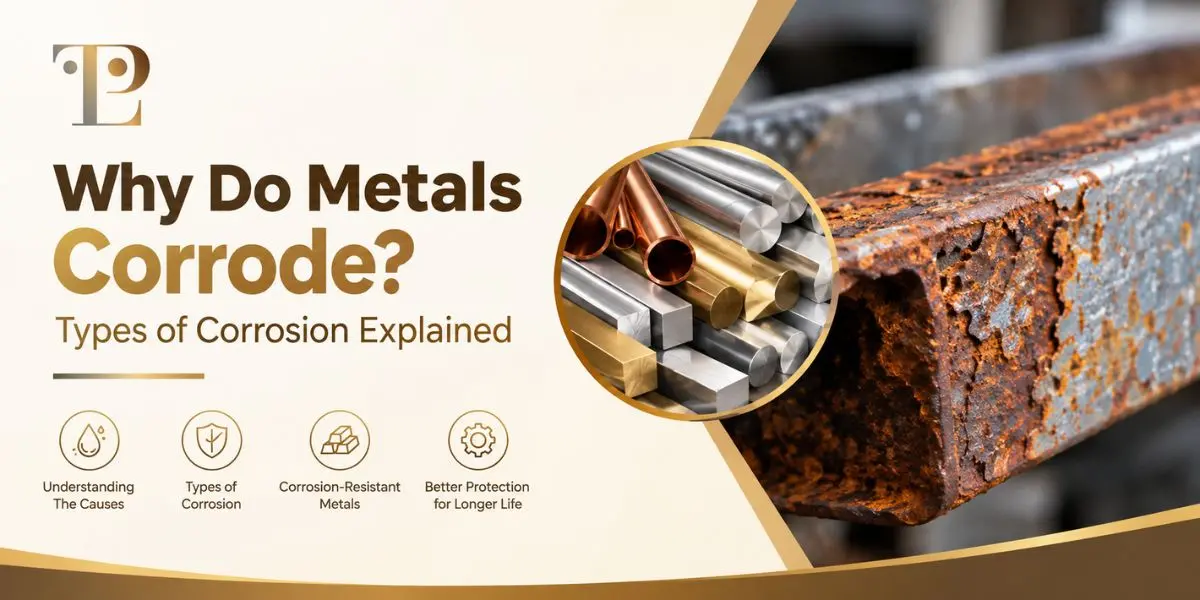
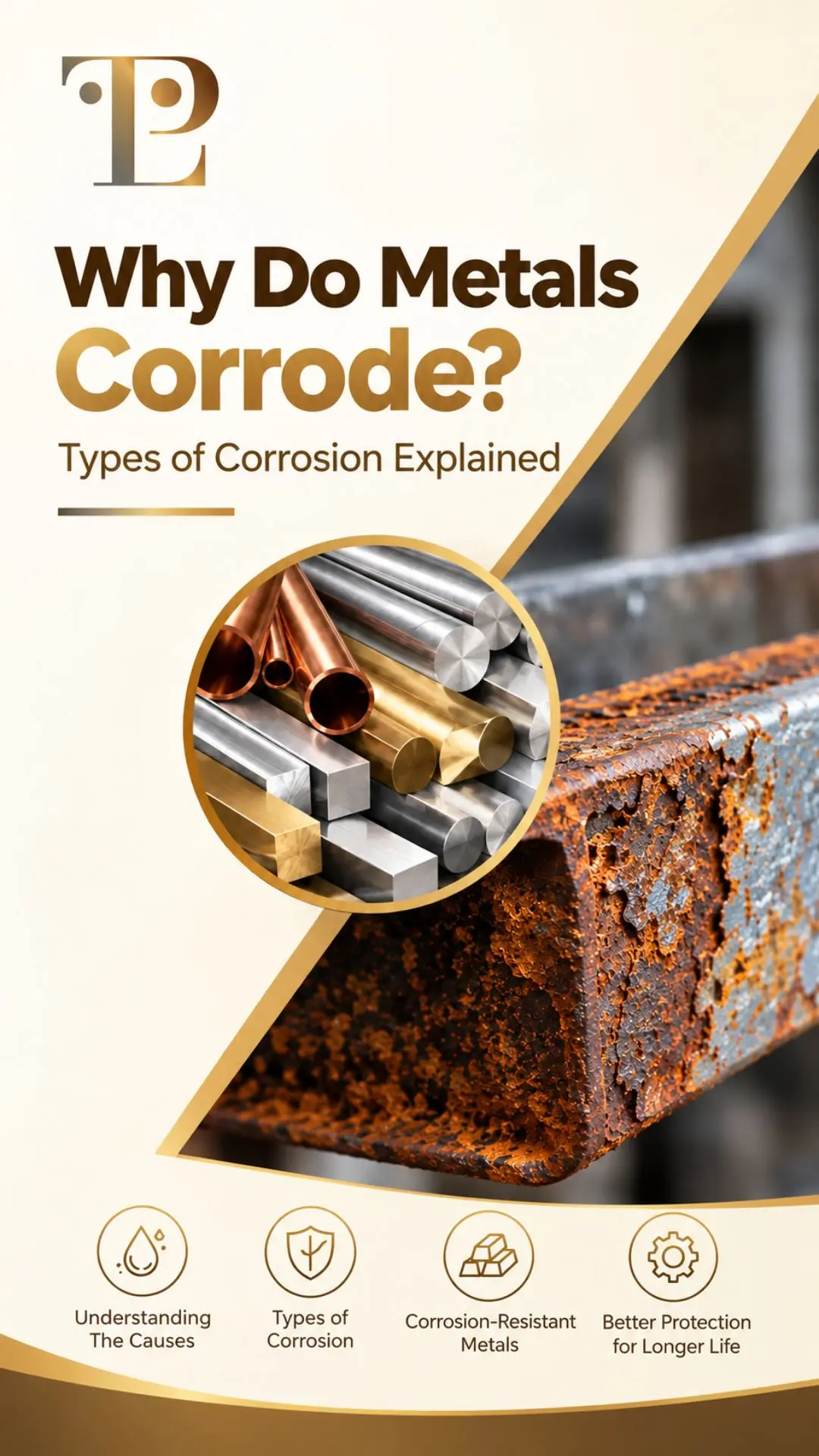
Why Do Metals Corrode?
Types of Corrosion Explained
Metal corrosion is a major concern for industries that depend on strong and durable materials. From construction and marine engineering to chemical processing and power generation, corrosion can gradually damage metal components and affect their performance. Therefore, understanding why Metals Corrode is important when choosing materials for demanding applications.
Corrosion occurs when a metal interacts with its surrounding environment through chemical or electrochemical processes. Moreover, moisture, oxygen, salts, chemicals, temperature, and contact between different metals can influence corrosion. Consequently, selecting suitable materials and applying effective protection methods can help improve service life and reduce maintenance requirements.
What Is Metal Corrosion?
Metal corrosion is the gradual deterioration of a metal because of reactions with its environment. In many cases, these reactions involve electrochemical processes. As a result, the metal surface can lose its original properties over time.
Metals can be exposed to several conditions that encourage corrosion, including:
- Moisture and water
- Saltwater and marine environments
- Acids and aggressive chemicals
- High temperatures
- Electrolytes
- Contact between dissimilar metals
Therefore, engineers need to consider both the material and its operating environment before selecting a metal for a particular application. Corrosion science and protection remain important areas of technical research and industry practice.
1. Why Do Metals Corrode?
To understand why Metals Corrode, it is important to look at their interaction with the surrounding environment. Metals can undergo chemical or electrochemical reactions when they encounter moisture, oxygen, salts, or other reactive substances.
For example, water can act as an electrolyte and support electrochemical reactions. Similarly, saltwater can create particularly challenging conditions because dissolved salts can increase electrical conductivity.
Furthermore, temperature and chemical exposure can influence the rate and form of corrosion. Poor component design can also create areas where moisture becomes trapped. Consequently, corrosion can develop faster in specific locations.
Contact between two different metals can create another risk. Galvanic corrosion can occur when two dissimilar metals are electrically connected in the presence of an electrolyte. This process can cause one metal to corrode more rapidly than the other.
2. Common Types of Corrosion
There are several forms of corrosion, and each behaves differently. Therefore, understanding these forms helps engineers identify potential risks and select suitable protection strategies.
General or Uniform Corrosion
General corrosion affects a relatively broad area of an exposed metal surface. The material gradually deteriorates across the surface, making this type easier to observe and monitor than some localized forms.
Pitting Corrosion
Pitting corrosion creates small cavities or pits on the metal surface. Although these openings may initially appear small, they can penetrate deeper into the material. As a result, pitting can become difficult to detect and may create serious local damage.
Crevice Corrosion
Crevice corrosion develops in narrow or confined spaces where moisture and corrosive substances can become trapped. For instance, joints, seals, and fasteners can create environments where corrosion develops more readily.
Galvanic Corrosion
Galvanic corrosion occurs when different metals come into electrical contact while an electrolyte is present. One metal acts as the anode and corrodes, while the other acts as the cathode. Therefore, engineers must carefully consider material combinations in marine and industrial systems.
3. Do Non-Ferrous Metals Corrode?
Yes, non-ferrous metals can also corrode. However, their corrosion behaviour differs according to their composition, surface condition, and surrounding environment.
For example, aluminium can form a protective oxide layer, while copper can develop surface corrosion products under certain environmental conditions. Similarly, other non-ferrous alloys can show different levels of resistance depending on their composition and application.
Therefore, it is incorrect to assume that only iron-based materials experience corrosion. Instead, engineers should evaluate the specific metal, environment, temperature, chemical exposure, and expected service conditions before making a material selection.
4. Corrosion Resistance of Different Non-Ferrous Metal Products
The corrosion performance of Non-ferrous metal products varies considerably. Moreover, the same material may behave differently when exposed to freshwater, seawater, chemicals, humidity, or elevated temperatures.
For this reason, material selection should consider the complete operating environment rather than corrosion resistance alone. Strength, durability, fabrication requirements, temperature resistance, and chemical compatibility may also influence the final choice.
Nickel-based alloys, for example, are widely studied for demanding corrosion environments, while other non-ferrous materials can offer useful performance in applications where their specific properties match operating requirements. Corrosion research continues to address material behaviour in challenging environments.
5. How to Protect Metals from Corrosion
Because Metals Corrode under different environmental conditions, prevention should begin with appropriate material selection and design.
Several approaches can help reduce corrosion risks:
- Select materials suited to the operating environment.
- Avoid unnecessary contact between incompatible metals.
- Prevent water from becoming trapped in confined areas.
- Use suitable protective coatings where appropriate.
- Maintain components and inspect surfaces regularly.
- Control exposure to aggressive chemicals where possible.
Additionally, corrosion monitoring can help identify problems before they become severe. Therefore, preventive maintenance can support longer component life and more reliable operation.
6. Choosing the Right Non Ferrous Metal for Your Application
Choosing a non ferrous metal requires more than simply comparing prices or basic material properties. Instead, businesses should evaluate the environment in which the material will operate.
Consider factors such as moisture, salt exposure, chemicals, temperature, mechanical loads, fabrication requirements, and expected service life. Furthermore, the application may require a balance between corrosion resistance, strength, weight, conductivity, and cost.
As a result, careful material selection can reduce the likelihood of premature deterioration and support better long-term performance.
7. How a Reliable Non-Ferrous Metals Supplier Can Help
A reliable Non-Ferrous Metals Supplier can support businesses by helping them identify materials that match their technical and application requirements. However, buyers should still verify material specifications, grades, certifications, and suitability for the intended environment.
Ultimately, understanding why Metals Corrode allows manufacturers, engineers, and buyers to make more informed decisions. Although corrosion cannot always be eliminated, appropriate material selection, good design, protection, and regular maintenance can reduce its impact.
In conclusion, Metals Corrode because they interact with environmental conditions through chemical and electrochemical reactions. Therefore, understanding corrosion types and material behaviour is essential for achieving durability, reliability, and longer service life in demanding applications.