

The Lifecycle of Aluminum:
From Scrap Metal to Everyday Goods
Table of Contents
Aluminum plays a vital role in modern life. From buildings and vehicles to kitchen appliances and packaging, this versatile metal is everywhere. However, recyclers can process aluminum repeatedly without reducing its quality, making it one of the most sustainable materials available today. As a result, it has become one of the most sustainable materials used across industries today.
Understanding the Lifecycle of Aluminum helps us appreciate how recycling supports both economic growth and environmental protection. Moreover, it highlights the importance of responsible scrap collection and processing in creating a circular economy.
Why Aluminum Is a Valuable Resource
Aluminum is known for being lightweight, durable, corrosion-resistant, and highly versatile. Consequently, manufacturers use it in construction, transportation, consumer goods, and packaging applications.
Unlike many materials that degrade during recycling, aluminum retains its original properties. Therefore, recycled aluminum can be transformed into new products without sacrificing quality. In fact, industry data shows that nearly 75% of all aluminum ever produced is still in use today because it can be recycled again and again.
This extraordinary recyclability forms the foundation of the Lifecycle of Aluminum and makes it a key material for sustainable development.
Common Sources of Recyclable Aluminum
Aluminum is widely available in both residential and commercial settings. As a result, collecting scrap aluminum is relatively easy.
Some common recyclable aluminum products include:
Household Items
Many everyday products contain aluminum. For example, pots, pans, curtain rods, shelving units, and small appliances can all be recycled at the end of their useful life.

Outdoor Furniture and Fixtures

Patio furniture, garden equipment, and outdoor fixtures often contain aluminum because it resists rust and withstands harsh weather conditions.
These products eventually contribute to the Lifecycle of Aluminum, ensuring valuable metal remains in circulation instead of becoming waste.
The Aluminum Recycling Process
The recycling journey consists of several important stages. Each step helps transform discarded scrap into valuable raw material.
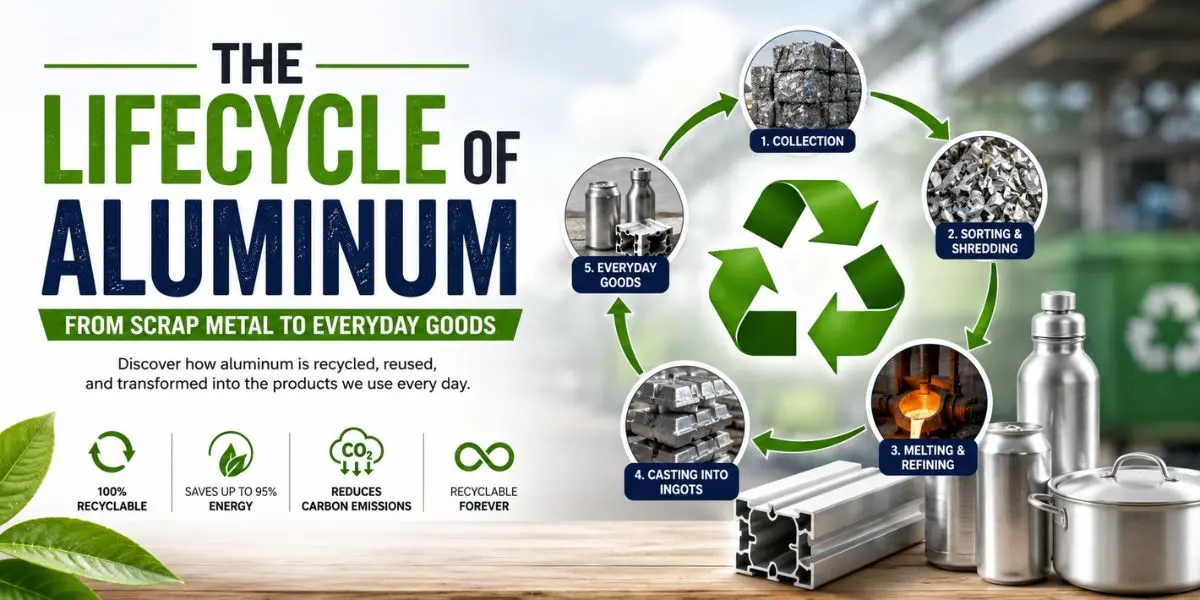
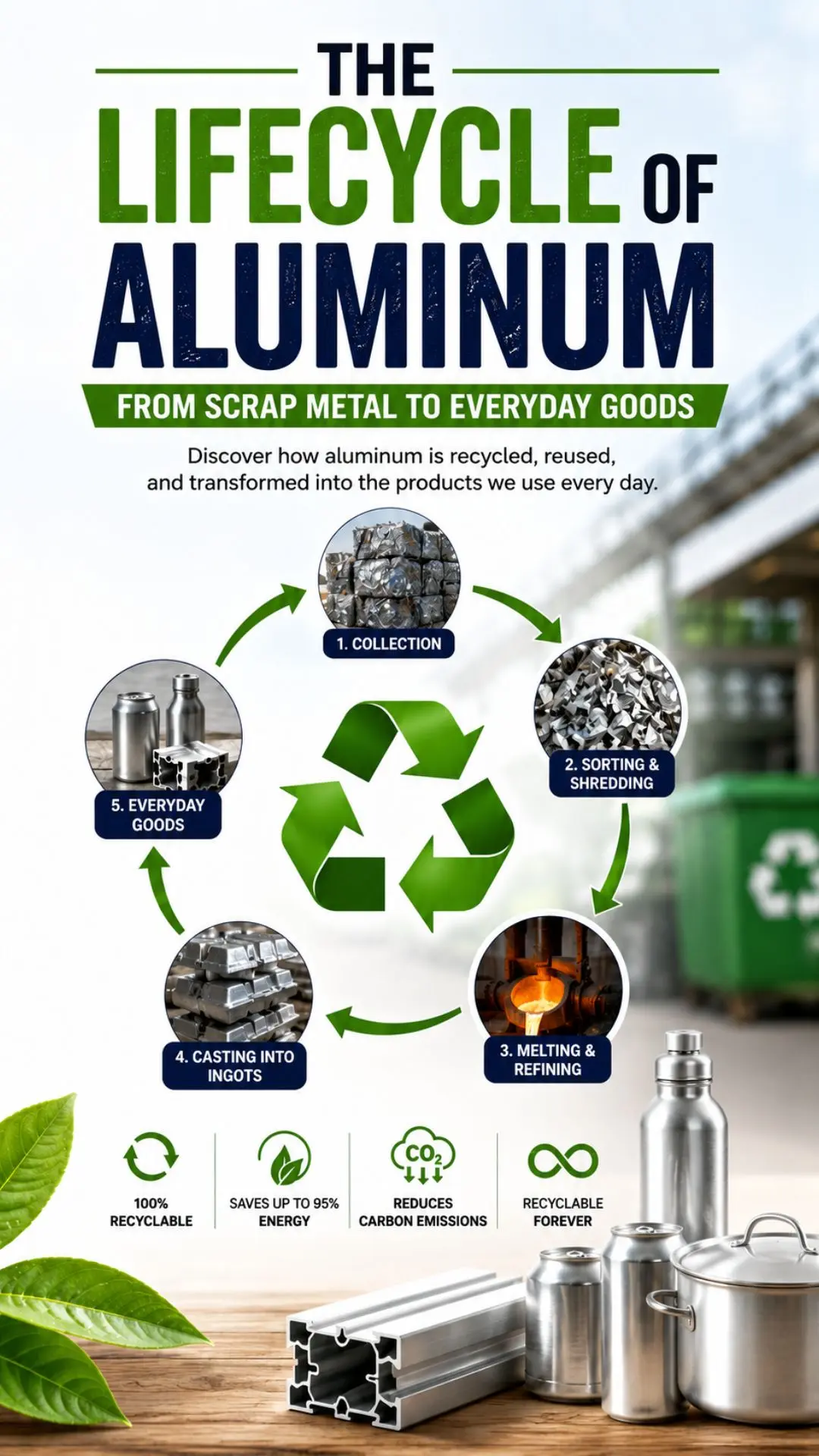
1. Collection
The process begins with collecting aluminum scrap from households, construction projects, demolition sites, and manufacturing facilities. Efficient collection systems ensure that recyclable materials do not end up in landfills.
2. Sorting and Shredding
Next, recyclers separate aluminum from other metals and non-metal materials. Afterward, the scrap is shredded into smaller pieces to improve processing efficiency.
At this stage, businesses often rely on the Best aluminum scrap supplier in India to maintain a consistent flow of quality recyclable material for industrial applications.
3. Cleaning and De-Coating
Many aluminum products contain paint, plastic coatings, or other contaminants. Therefore, recyclers remove these materials before melting. This cleaning process improves the quality of the final recycled metal.
4. Melting and Refining
Recyclers melt the cleaned aluminum in specialized furnaces. During this stage, impurities rise to the surface, and workers remove them to produce high-purity aluminum. Consequently, manufacturers obtain high-purity aluminum suitable for producing new goods.
5. Casting into Ingots
Finally, the molten metal is poured into molds and cast into ingots. These ingots serve as raw materials for manufacturing industries, completing an important phase in the Lifecycle of Aluminum.
From Recycled Metal to Everyday Products
After processing, recycled aluminum returns to the marketplace in many forms.
For example, manufacturers use recycled aluminum to produce:
- Automotive components
- Building materials
- Beverage cans
- Consumer electronics
- Household appliances
- Industrial machinery
As a result, the Lifecycle of Aluminum creates a continuous loop where old products become new ones. Furthermore, this process reduces dependence on virgin raw materials and supports resource conservation.
Environmental Benefits of Aluminum Recycling
The environmental advantages of aluminum recycling are significant.
First, recycling aluminum requires only about 5% of the energy needed to produce primary aluminum from raw materials. In other words, it saves approximately 95% of the energy required for new production.
Second, lower energy consumption leads to reduced greenhouse gas emissions. Consequently, aluminum recycling helps combat climate change while supporting sustainable manufacturing practices.
Additionally, recycling reduces the need for mining and raw material extraction. Therefore, natural resources are preserved for future generations.
These benefits demonstrate why the Lifecycle of Aluminum is considered one of the most efficient material cycles in the world.
Supporting a Circular Economy
A circular economy focuses on keeping materials in use for as long as possible. Aluminum fits perfectly into this model because it can be recycled indefinitely without losing its value.
Moreover, high recycling rates help industries reduce production costs and environmental impact simultaneously. As businesses increasingly adopt sustainability goals, aluminum recycling continues to gain importance worldwide.
Therefore, investing in proper collection, sorting, and recycling infrastructure strengthens the entire Lifecycle of Aluminum while creating long-term economic and environmental benefits.
Conclusion
The Lifecycle of Aluminum demonstrates how a single material can move through multiple generations of products without losing its quality. From discarded household items and construction materials to newly manufactured goods, aluminum remains one of the most sustainable resources available today. Furthermore, its ability to be recycled endlessly helps conserve energy, reduce emissions, and support a circular economy. As industries continue prioritizing sustainability, partnering with a reliable aluminum scrap supplier in India can play a crucial role in ensuring valuable aluminum resources stay in productive use for years to come.